
The traditional office landscape has undergone a seismic shift, and the tremors are far from over. As we gaze into 2025 and 2026, the concept of a static, full-time office is increasingly giving way to a dynamic, on-demand model, with hourly office space rentals emerging as a pivotal trend. For office managers, flexible space providers, and property owners, understanding this evolution isn’t just beneficial – it’s crucial for future-proofing their operations and maximizing profitability. This article delves into the burgeoning world of flexible workspace, exploring the upcoming trends and the diverse types of workers driving the demand for hourly office rentals across the United States.
The Evolution of Work: Beyond the Hybrid Hype
While hybrid work models dominated the post-pandemic discourse, the next two years will see a refinement and expansion of this flexibility, pushing the boundaries into true “work-on-demand.” This isn’t merely about remote work; it’s about a granular approach to physical presence, where workers choose not just where they work, but when and for how long. This shift is fueled by a confluence of technological advancements, changing workforce demographics, and a growing emphasis on work-life integration.
Key Trends Shaping Hourly Office Space in 2025-2026:
- Hyper-Personalization and Niche Offerings: The “one-size-fits-all” model for flexible office space is rapidly becoming obsolete. We’ll see a surge in specialized hourly office rentals catering to specific needs. Think soundproof pods for podcasting, fully equipped kitchens for culinary entrepreneurs, or advanced AV studios for content creators. Flexible space managers will need to diversify their offerings to capture these niche markets. The demand for hourly meeting rooms near me will expand to include highly specialized, industry-specific setups.
- Integrated Technology and Seamless User Experience: The booking, access, and usage of hourly office space will become even more frictionless. AI-powered platforms will optimize room allocation, predictive analytics will anticipate peak demand, and biometric access will become standard. Smart office technology, from automated lighting to personalized climate control, will enhance the user experience. The future of flexible office rentals hinges on intuitive technology that simplifies every step from discovery to departure.
- Wellness-Centric Design and Biophilic Spaces: As mental and physical well-being take center stage, hourly office spaces will increasingly incorporate biophilic design elements – natural light, greenery, and ergonomic furniture – to create calming and productive environments. On-site wellness amenities, such as meditation rooms, exercise zones, and healthy snack options, will become differentiators for premium hourly workspace options.
- The Rise of the “Third Space” Hub: Beyond home and the traditional office, hourly office rentals will solidify their position as the “third space” – a neutral, professional environment conducive to focused work, collaboration, and networking. These hubs will increasingly integrate with local communities, offering more than just desk space but also events, workshops, and opportunities for social interaction. Look for hourly office rentals with community perks to gain traction.
- Subscription Models and Dynamic Pricing: While hourly booking will remain prevalent, we’ll see an expansion of flexible subscription models, allowing frequent users to access a network of spaces at preferential rates. Dynamic pricing, similar to ride-sharing apps, will optimize occupancy by adjusting rates based on demand, time of day, and duration. This will be a key strategy for flexible workspace providers to maximize revenue.
- Sustainability as a Core Offering: Environmentally conscious businesses and individuals will prioritize hourly office space providers who demonstrate a commitment to sustainability. This includes energy-efficient buildings, waste reduction programs, and responsible sourcing of materials. Marketing initiatives highlighting eco-friendly practices will resonate strongly with a growing segment of the market.
Who is Driving the Demand for Hourly Office Rentals?
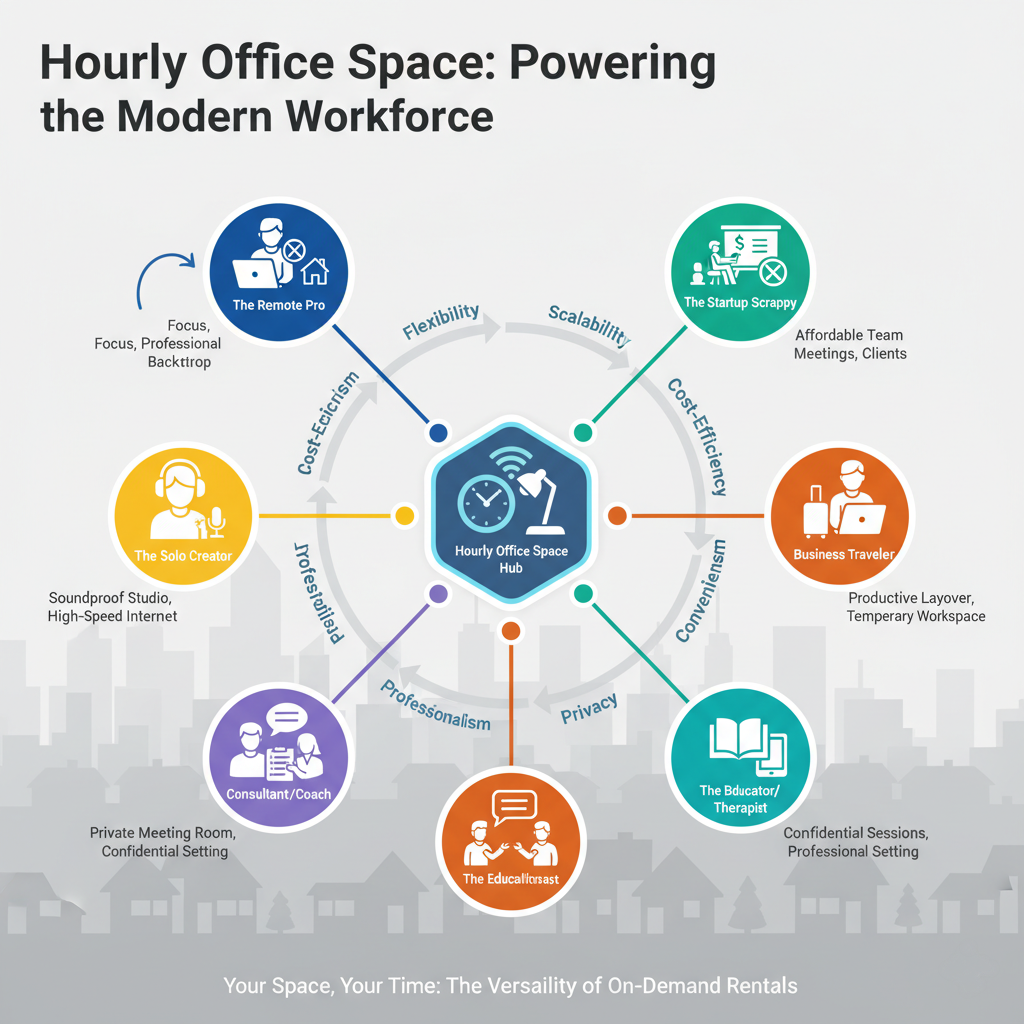
The allure of hourly office space isn’t limited to a single demographic; rather, it caters to a diverse ecosystem of professionals and businesses. Understanding these user profiles is paramount for providers looking to tailor their offerings and marketing efforts.
- The Hyper-Flexible Remote Worker: While many can work from home, the need for a dedicated, professional environment for specific tasks – client calls, focused deep work, or a change of scenery – is undeniable. These individuals are seeking hourly desk space or private office for rent by the hour to break the monotony of home offices and enhance productivity. They might be digital nomads, consultants, or employees of fully remote companies needing occasional in-person touchpoints.
- Solopreneurs and Freelancers: For this burgeoning segment of the workforce, traditional long-term leases are impractical and expensive. Hourly office space provides the professionalism of a corporate environment without the overhead. They use it for client meetings, presentations, and to establish a credible business presence. They are actively searching for affordable hourly office space and meeting rooms hourly rate.
- Small Businesses and Startups: Rather than committing to a costly long-term lease, small businesses and nascent startups utilize hourly office rentals for team meetings, training sessions, or to host clients. It offers scalability and flexibility, allowing them to expand or contract their physical footprint as needed without significant financial risk. Their searches often include flexible office solutions for startups and temporary office space.
- Satellite Teams and Project-Based Workers: Larger organizations with remote employees or project-specific teams spread across different geographies will leverage hourly office rentals as localized hubs. This allows for occasional in-person collaboration without the need for a permanent branch office. They seek hourly team rooms and collaboration spaces for rent.
- Travelers and Business Visitors: Professionals on business trips often require a quiet, professional space to work between meetings or to take important calls. Hourly office space near airports or in central business districts caters perfectly to this need, offering a productive refuge on the go.
- Educators, Coaches, and Therapists: Many independent professionals in these fields require a private, discreet, and professional setting to meet with clients or students. Hourly consultation rooms and therapy offices for rent by the hour offer an ideal solution without the commitment of a full-time lease.
Top Locations in the United States for Hourly Office Space Use (2025-2026):
The demand for hourly office rentals is not evenly distributed across the US. While major metropolitan areas will continue to lead, secondary cities and burgeoning tech hubs are rapidly gaining prominence due to a combination of talent migration, lower cost of living, and a robust startup ecosystem.
- New York City, NY: Always a hub of business and innovation, NYC’s density and diverse industries ensure continued high demand for hourly meeting rooms Manhattan and flexible workspace NYC. The high cost of traditional real estate makes hourly options particularly attractive.
- San Francisco Bay Area, CA: Despite recent shifts, the concentration of tech companies and startups in Silicon Valley and San Francisco will maintain a strong need for hourly office space Palo Alto and flexible desk space San Francisco. The culture of rapid iteration and project-based work naturally lends itself to on-demand spaces.
- Austin, TX: A booming tech hub attracting talent from across the country, Austin is seeing exponential growth in demand for hourly office rentals Austin and flexible workspaces Texas. Its vibrant startup scene and influx of remote workers contribute significantly.
- Miami, FL: Emergence as a major financial and tech hub, coupled with its attractive lifestyle, makes Miami a prime location for hourly office space Miami and coworking by the hour Florida. Many companies are establishing satellite offices or relocating, driving demand for flexible solutions.
- Denver, CO: With a strong outdoor recreation industry, a growing tech sector, and a high quality of life, Denver attracts a flexible workforce. Demand for hourly office space Denver and meeting room rentals Colorado is on the rise.
- Seattle, WA: Home to tech giants and a thriving startup ecosystem, Seattle continues to be a hotspot for hourly office space Seattle and flexible workspace Pacific Northwest. The city’s high cost of living also makes on-demand solutions appealing.
- Atlanta, GA: A major transportation hub and a growing center for film, tech, and logistics, Atlanta offers a diverse economy that fuels demand for hourly office rentals Atlanta and flexible meeting rooms Georgia.
- Chicago, IL: A historic business center, Chicago’s robust corporate landscape and diverse industries ensure a consistent need for hourly office space Chicago and flexible work options Illinois.
The Road Ahead for Office Managers and Owners:
For office managers, flexible space operators, and property owners, the message is clear: adapt or be left behind. Embracing hourly office rentals and understanding the evolving needs of the modern workforce is not just about filling vacant space; it’s about creating value, fostering community, and building a resilient business model for the future. Investing in technology, offering diverse and personalized spaces, and prioritizing user experience will be the hallmarks of successful flexible office rental providers in 2025 and 2026. The flexible frontier is here, and it’s ripe with opportunity for those ready to navigate its dynamic landscape.